



Additional Information
Understanding Levels of Therapeutic & Mental Health Support
Mental health and therapeutic services within the UK are commonly understood using a tiered framework, ranging from early intervention and emotional wellbeing support through to specialist and crisis services. While originally associated with Children and Young People’s Mental Health Services (CAMHS), similar stepped levels of support are also recognised across adult mental health services, counselling, community, safeguarding, and therapeutic services.
We believe it is important to be transparent about levels of experience, competence, scope of practice, qualifications, and the types of presentations that may be appropriately supported within independent therapeutic practice.
The therapy and wellbeing sector is currently broad and largely unregulated in some areas, which can make it difficult for individuals, families, schools, and professionals to understand the differences between qualified therapeutic practitioners, accredited professionals, wellbeing services, coaching approaches, and specialist mental health support.
We believe clients should feel informed and empowered to ask questions about:
>qualifications and accredited training
>professional memberships and ethical standards
>supervision and safeguarding practice
>insurance and governance
>experience with specific presentations or client groups
>understanding of risk, referral pathways, and professional limitations
Seeking support can be an important and vulnerable step. Understanding the level of training, competence, accountability, and experience held by a practitioner helps individuals make safer and more informed decisions about the support they access.
Our professional experience spans counselling, trauma-informed practice, safeguarding, domestic abuse and sexual violence support, justice services, youth intervention, emotional regulation programmes, community support, crisis-informed environments, and multi-agency working with both Adults and Children & Young People.
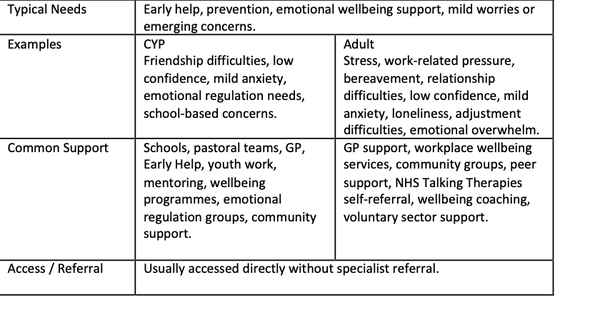
The Tier 1-4 guide below is designed to help individuals, families, schools, professionals, and referral partners better understand the different levels of support, intervention thresholds, and referral pathways that may exist across services within the UK, including the Isle of Wight.
This information is provided for guidance, it is not exhaustive and is not intended to replace clinical assessment, safeguarding procedures, statutory intervention, or emergency mental health support
TIER1
TIER3

TIER2

TIER4
